PeaKeen_logo

First-Time Buyers’ Guide: How to Choose Soft vs Hard Enamel Pins

Table of Contents

If you are ordering an enamel pin for the first time, one of the most important decisions you will make is choosing between soft enamel pins and hard enamel pins.

Both styles are widely used for branding, collectibles, recognition programs, and promotional giveaways, but they differ significantly in texture, durability, appearance, and cost.

For first-time buyers, the choice can feel confusing. Should you choose textured soft enamel lapel pins with visible raised metal lines, or smooth and polished hard enamel products with a jewelry-like finish?

The answer depends on your design complexity, preferred enamel colors, budget, and intended use.

This guide will help you understand the differences between hard and soft enamel and make the right decision in less than three minutes.

Selection Guide for Custom Lapel Pins

To ensure you make the correct craft choice on your very first order, look at how your project fits into these four distinct application categories:

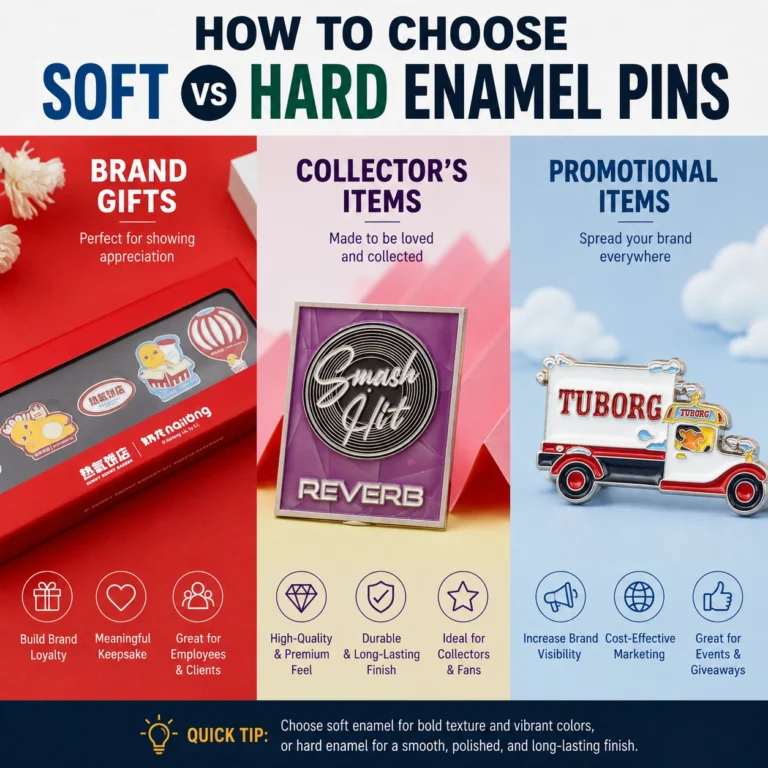
  1. Brand Gift: If you are distributing corporate gifts to high-value clients or employees, choose hard enamel pins. Pair them with a secure attachment like a premium military clutch or a traditional safety pin, and house them in a sleek velour pouch to instantly elevate the unboxing experience.

  2. Collectibles: For retail merchandise, band merch, or fan conventions, hard enamel is the industry gold standard. It mimics the premium finish of historical cloisonné pins and commands a higher retail price point, making it ideal for themed designs such as custom bread pins for bakeries or food brands.

  3. Budget Events: If you are managing a massive giveaway for school sports teams, charities, or large promotional marketing campaigns, stick with soft enamel pins. This allows you to scale up production while keeping unit costs low.

  4. Commemorative Items: For corporate milestones or military award pins, a heavy die struck base with a hard enamel finish creates a durable heirloom quality that stands the test of time.

An infographic showing the differences between soft enamel and hard enamel pins with examples for brand gifts, collector's items, and promotional items, highlighting qualities such as premium feel, durability, and marketing effectiveness.

Material & Finish

To learn about the difference between hard and soft enamel, we have to look at the baking and polishing process. Both styles typically start with a base sheet of zinc alloy or brass, which is metal-stamped or die struck to create the recessed cavities of your custom artwork.

Soft Enamel Pins

When manufacturing custom soft enamel pins, a single layer of liquid enamel paint is injected into the recessed areas of the design.

Once baked, the enamel naturally settles and clings to the edges, leaving the raised metal borders slightly higher than the paint.

This gives soft enamel lapel pins a distinct, textured, and dimensional feel that many collectors love.

Hard Enamel Pins

In contrast, custom hard enamel pins (traditionally related to classic cloisonné pins) take the process a step further.

The enamel paint is filled over multiple stages until it sits perfectly flush with the metal edges.

The pin is then baked at high temperatures and polished down until the surface is completely flat, smooth, and glossy.

Tactile & Visual FeatureSoft Enamel PinsHard Enamel Pins
Surface TextureRecessed paint with dimensional, raised metal ridgesPerfectly flat, smooth, polished, diamond-like finish
DurabilityHigh, but paint is exposed to surface frictionExtremely high, highly scratch-resistant surface
Production CostBudget-friendly, ideal for high volumesPremium pricing due to multi-stage polishing
Visual StyleTraditional, classic, tactile feelModern, luxury, retail-ready appearance
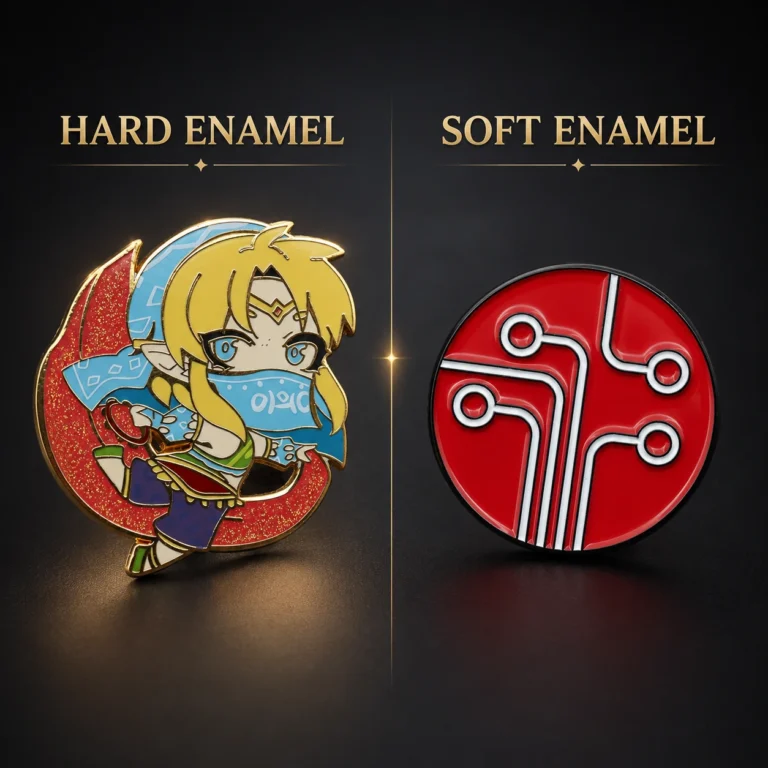
Two enamel pins on a black background illustrating the difference between hard and soft enamel. The left pin is a colorful hard enamel character design, while the right pin is a red soft enamel pin with a simple line circuit pattern.

Important Notes

When deciding between soft enamel and hard enamel, your choice should align with your specific artwork and intended use.

  • Surface Quality and Texture: If your audience prefers a modern, flat appearance that won’t catch on clothing, hard enamel is the clear winner. If they prefer a vintage, dimensional finish where you can feel the metallic outlines, go with soft enamel.

  • Color Accuracy and Consistency: Hard enamel offers a rich, jewel-like presentation where the enamel colors are baked to a brilliant sheen. Soft enamel offers bright, punchy colors that match closely to Pantone graphics.

  • Detail Capability: Because soft enamel allows for slightly thinner metal edges, it is incredibly capable of capturing intricate lines in complex artwork.

Die Struck Pins and Enamel Lapel Pins

If you choose a pure die struck design without any paint fills, you rely entirely on the polished metal to show details. However, adding color transforms them into enamel lapel pins. For fundraising events, promotional gifts, or retail collectibles, selecting the right paint fill ensures your custom company logo pins stand out clearly. Soft enamel remains one of the most popular custom enamel pins choices worldwide because it balances detailed accuracy with exceptional cost efficiency.

Ready to create your first pin design? Getting the technical details right shouldn’t be a stressful process. PeaKeen can be your partner when it comes to custom pins, and their sales team are experts in giving you directions in design and placing your order. Whether you need a simple sketch turned into retail-ready merchandise or help picking the right metal plating, they ensure your first buying experience is entirely seamless.

Visual and Graphic

Texture and Tactile Comparison

When reviewing artwork, ask your pin makers to provide comparison images showing textured soft enamel versus smooth hard enamel surfaces.

Design Elements to Review

Focus on:

  • Metal edges

  • Color fills

  • Backing type and how it will affect long-term wear, removal, and potential lapel pin repair and maintenance

  • Plating finish, especially if you plan to expand into matching custom enamel charms or other accessories

  • Packaging options such as a velour pouch

Application Scenarios

Both custom lapel pins and enamel lapel pins are commonly used for recognition and identity in specific professions, from schools to hospitality, including culinary settings that may feature custom chef pins as part of the uniform or award system.

  • Trade shows

  • Schools

  • Nonprofits

  • Employee recognition

  • Military and commemorative programs

More Posts

Send Us A Message

Contact Us

What customization do you need? – Get expert support now

Haven't Find What You Need?

Contact Us For More

Get Discount

New Client Special Offer

10% Off