PeaKeen_logo

How to Check Medal Quality Before Shipping

Table of Contents

Ensuring the quality of a physical product is the final frontier before it reaches the hands of a recipient. Even a beautifully designed medal can lose its value if the plating is uneven, colors are inconsistent, or attachments are loose. For event organizers, poor quality can lead to disappointed participants and costly replacements.

Before any medal leaves the production facility, a rigorous process of verification must occur. This guide outlines the essential steps to verify that your medal order meets all specifications and performance standards.

What Does “Medal Quality” Really Mean?

When manufacturers evaluate a medal, they look at several aspects of quality, including:

  •  Metal finish and surface smoothness
  •  Color accuracy and enamel consistency
  •  Correct size and thickness
  •  Attachment strength
  •  Packaging condition 

Each of these factors is compared against approved artwork and technical specifications. Maintaining strict compliance with these standards ensures that every medal reflects the original design.

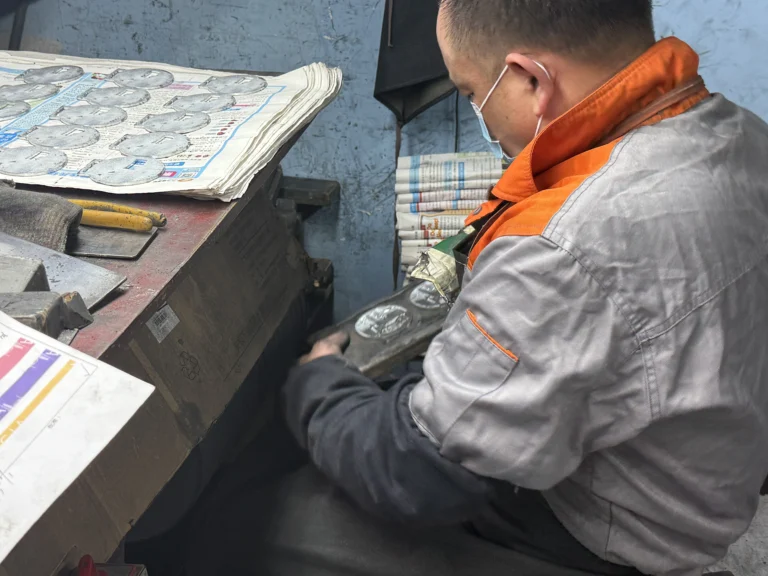
A worker carefully inspecting and polishing a series of metal medals to ensure smoothness and a high-quality finish.

Digital Resolution

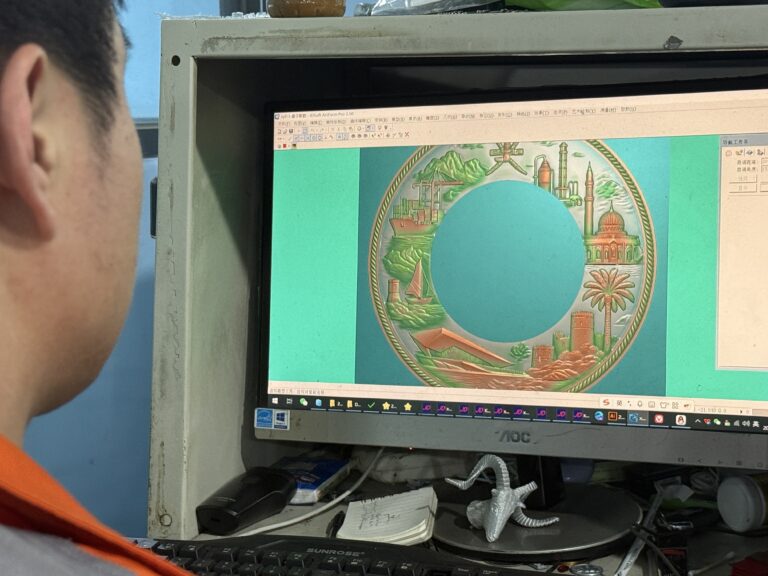
Before the physical production even starts, the quality of the 3D model is paramount. Modern medal design utilizes high-end rendering where a gpu encoder is used to process complex visual data. A high-performance gpu encoder allows designers to see a high-resolution preview of the medal with a high bitrate of detail, ensuring that every curve and text element is perfect.

In this digital process, the system must be capable of rendering fine textures that will eventually be translated into the metal die. If the resolution of the initial design is low, the physical quality will suffer. Therefore, checking the digital specifications is the first true quality check in the manufacturing range.

A worker closely inspecting a computer screen displaying a detailed 3D CNC engraving design for a decorative metal plate, ensuring accuracy before production.

The Manufacturing Process and Technical Specifications

The core production process is where quality is either won or lost. Each medal must be weighed to ensure it meets the specifications for thickness and medal diameter. If the weight is off, it indicates an issue with the base metal components.

  •  Plating: Check for bubbles or peeling in the gold or antique finishes.
  •  Enamel: Ensure the bitrate of color is vibrant and correctly cured.
  •  Attachment: The loop must be secure and capable of holding the ribbon during heavy movement. 

Note: A high-quality process should result in a medal that feels substantial. Any medal that feels “hollow” or light likely fails the initial specifications check.

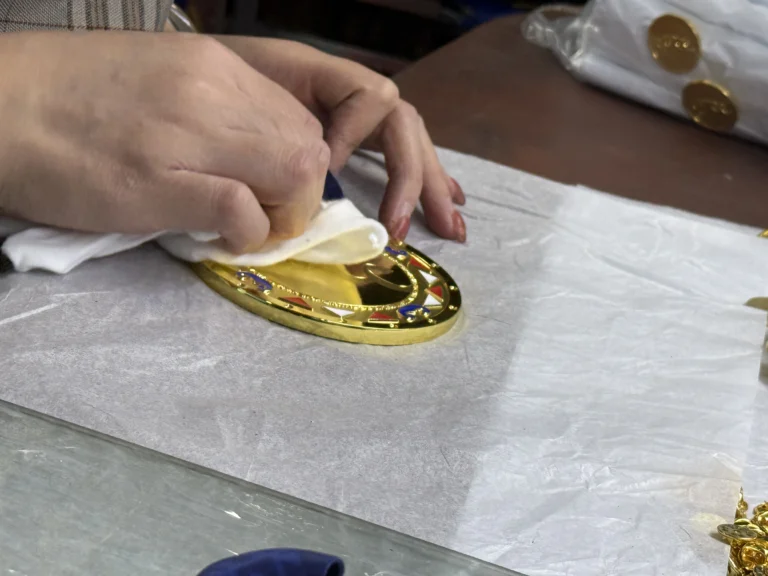
A worker carefully cleaning and adding color to a gold medal, ensuring the paint and enamel are properly applied before final inspection.

The Physical Production Process

Beyond looks, a medal must be physically sound. The production process includes several stress tests:

  •  Plating Adhesion: A “tape test” is often used to ensure the gold or silver finish won’t peel over time.
  •  Safety Compliance: Every medal must fall within a non-toxic range, specifically regarding lead and nickel content.
  •  System Performance: If the medal has interactive features, the moving components are tested for smooth rotation. 

Note: The cost of performing these checks is minimal compared to the cost of replacing an entire order of defective awards.

Final Review

The final step in the process is a manual count and weight verification. Each medal must match the specifications outlined in the initial contract. If the bitrate of the production speed was too high, small details in the army crest or event logo might be blurred; these must be caught and pulled from the range of shippable items.

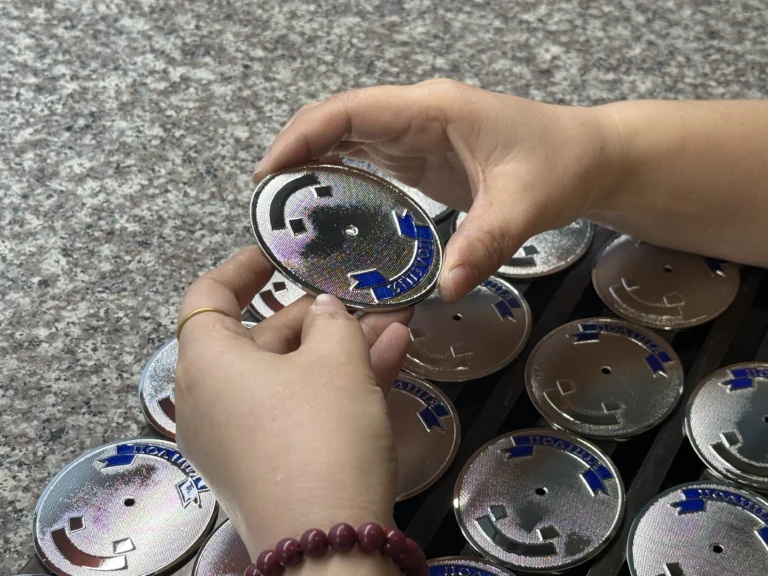
A worker holding a freshly finished medal, carefully inspecting the embossed details and color filling for quality before packaging.

Is your event deadline approaching?

Don’t leave your quality to chance. PeaKeen can be your partner when it comes to custom medals, and their sales team are experts in giving you directions in design and placing your custom medals order. With a high-performance system for tracking specifications, PeaKeen ensures your medals arrive exactly as expected.

More Posts

Send Us A Message

Contact Us

What customization do you need? – Get expert support now

Haven't Find What You Need?

Contact Us For More

Get Discount

New Client Special Offer

10% Off