PeaKeen_logo

What Information Do Custom Medal Manufacturers Need to Start Production?

Table of Contents

Imagine this: your event is two weeks away, the athletes are fueled up, and the finish line is waiting. You reach out to a factory to get those glorious gold awards made, only to realize you forgot to specify how thick the metal should be or what the back of the medal should look like.

Beyond their physical form, medals carry a deep sense of accomplishment and honor for recipients, serving as powerful symbols that foster pride and team unity.

In the world of custom metal crafts, the difference between a masterpiece and a mistake lies in the details. Medal manufacturers aren’t just hitting a “print” button; they are engineers, artists, and logistics experts. To meet diverse event needs, medal manufacturers often offer a wide selection of recognition products, including trophies and awards, with various customization options. To help you cross your own finish line without any hurdles, we’ve put together the ultimate checklist of everything a manufacturer needs to bring your vision to life.

1. Why Clear Production Information Matters

Before a single ounce of metal is melted, the “blueprint” must be perfect. Providing complete project details up front does three critical things:

  • Avoids Delays: No more waiting for clarification emails.

  • Prevents Errors: Ensure the “2026” on your design doesn’t accidentally become “2025.”

  • Eliminates Extra Costs: Changing a design after the mold is made is an expensive mistake you definitely want to avoid.

Clear communication is the secret sauce. By being precise before sampling begins, you ensure the mass production phase is a smooth, high-speed sprint. Reputable medal manufacturers demonstrate their commitment to quality and service, backed by a proven track record in the business of delivering reliable results. Transparent pricing and the absence of hidden fees are also hallmarks of trustworthy medal manufacturers.

2. Artwork or Design File

The first thing medal manufacturers need is a design concept. This can be a professional artwork file, a logo, or even a rough sketch. Manufacturers work closely with customers to transform their ideas into personalized designs, offering free design support and revisions to ensure the final product meets specific preferences and requirements. The clearer the design, the easier it is to translate it into a physical medal.

Custom medal design can include CAD designs, custom shapes, and 3D molding to create unique, personalized medals that bring your ideas to life. Preferred file formats usually include AI, PDF, PNG, or PSD. These formats help manufacturers maintain design accuracy, especially when producing detailed medals.

3. Medal Size and Thickness

Size matters… Literally. A “standard” medal doesn’t really exist because every event has a different vibe. Specifying the exact size and thickness is essential. These dimensions directly impact the look, weight, and feel of the medal. Medals can also be customized into any shape—not just round—allowing for unique designs that match the theme or branding of your event.

Most sports medals range from 50mm to 70mm (about 2 to 2.75 inches) and the thickness usually ranges from 2.5mm to 5mm.

The manufacturer uses these numbers to calculate how much metal is needed and how much the final shipping weight will be. A 6mm thick marathon medal feels like a heavy-duty accolade, while a 2.5mm medal is perfect for a local school fun run.

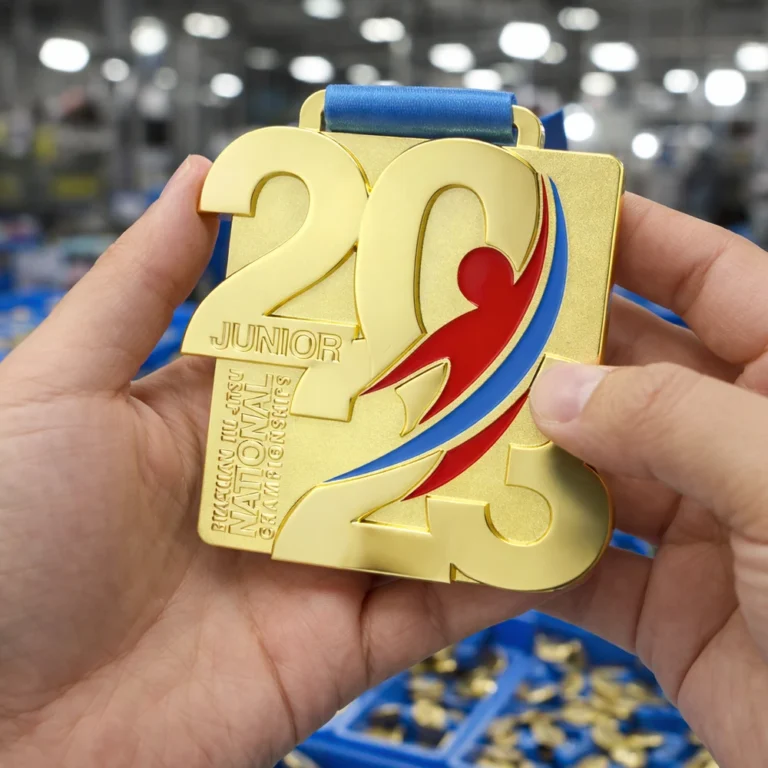
A gold-colored medal marked “2023” with a stylized athlete figure and ribbon, held in hands against a blurred workshop background.

4. Material Selection

Not all medals are created equal. Your material choice dictates the weight, the level of detail, and, of course, your budget.

Each material affects the medal’s weight, durability, and level of detail. For example, zinc alloy is great for intricate designs, while iron is more budget-friendly. Experienced manufacturers often recommend materials based on the design and budget. Common base metals include zinc alloy, which is versatile and allows for detailed 3D work; brass and copper, which offer a premium look and feel; and iron, which is sturdy and cost-effective but needs proper plating to prevent rust.

Zinc Alloy: The “all-rounder.” It’s the most popular choice because it allows for high-detail 3D designs and has a satisfying weight.

Iron: The budget-friendly option for simple designs. It’s sturdy but prone to rust if not plated correctly.

Brass/Copper: The premium “jewelry” choice for high-end awards.

Custom medals can also be made from wood, PVC, acrylics, pewter, and other materials to suit different budgets and preferences, offering diverse design options and unique aesthetics. Some high-value awards are crafted from precious metals, further enhancing their value and prestige. Medals can be finished in a variety of styles, including antique gold, silver, bronze, nickel, and enamel, to match your desired look.

If you aren’t sure, don’t sweat it. A professional manufacturer, like PeaKeen, will usually recommend a material based on your specific design style and target price point.

5. Plating Color and Surface Finish

Plating defines the final appearance of the medal. Do you want the classic Olympic Gold, Silver, and Bronze, or something more modern? Your choice will give your medal a unique feel and look.

  • Shiny Finishes: High-polish, mirror-like surfaces that catch the light.

  • Matte/Antique Finishes: These have a “weathered” look that hides fingerprints and highlights 3D textures beautifully.

  • Confirm Early: Once the plating process starts, there’s no going back. Confirmation here is non-negotiable.

6. Color Filling and Enamel Details

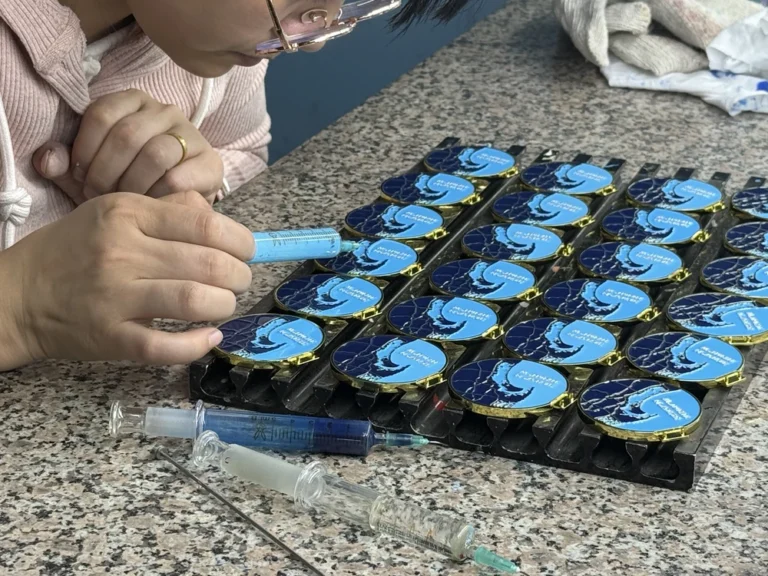
If the design includes colors, manufacturers need to know the exact requirements. This includes whether to use soft enamel, hard enamel, printing, or no color at all.

The number of colors and their exact shades should also be specified. For precise results, Pantone color references are often used to ensure consistency.

A close-up of a worker using a syringe to fill blue enamel into medal designs arranged in trays during a detailed manufacturing process.

7. Ribbon

The medal is the star, but the ribbon is the supporting actor that holds it all together. Ribbons are available in a wide variety of colors and styles, making them an integral part of custom awards. Top medal manufacturers offer custom ribbon options as part of their comprehensive services, allowing you to further personalize your medals for any event.

  • Width & Length: Standard is usually 25mm to 38mm wide.

  • Styles: Choose between a simple stock ribbon (solid colors) or a custom-printed sublimation ribbon featuring your event name and sponsor logos.

  • Attachment: Do you want a simple “V-sewn” loop or a more durable “sewn-on” clip?

8. Backside Design and Extra Details

The back of the medal should not be overlooked. Buyers need to decide whether it will be blank, engraved, printed, or include additional elements.

Common additions include event names, sponsor logos, dates, or serial numbers. These details must be finalized early to avoid changes after mold production.

9. Quantity and MOQ (Minimum Order Quantity)

Manufacturers need to know the “headcount.” Because the mold fee is a fixed cost, ordering 500 medals is significantly cheaper per unit than ordering 50.

Most custom factories have a minimum order requirement (MOQ) of 50 to 100 pieces for custom medals to make the setup worth the time, while there is no minimum for stock medals—customers can order as few or as many as needed.

Larger orders may qualify for quantity discounts or special pricing, and for in-stock medals, some manufacturers offer same-day turnaround to meet urgent event needs.

10. Packaging for Medals

How do you want the winners to receive their prize?

  • Polybag: The standard, budget-friendly way to prevent scratches during shipping.

  • Backing Cards: Great for branding and “retail” presentation.

  • Velvet Boxes: Essential for high-end corporate awards or prestigious championships.

11. Delivery Deadline and Shipping Method

Sharing the event date is critical. Manufacturers need to plan production and shipping timelines accordingly. Many medal manufacturers offer fast production for tight deadlines, and rush shipping options—including overnight shipping—are available to meet urgent delivery needs. Reliable manufacturers will commit to specific delivery dates in writing, ensuring customers receive their orders on time. Production lead times for custom medals typically range from 7–15 days, while custom molds may require 15–25 days.

Buyers should also choose between air shipping (faster but more expensive) and sea shipping (slower but more cost-effective). This decision impacts both delivery time and budget.

12. Approval Process

A professional manufacturer will always provide a digital proof (a 2D mockup showing dimensions and colors).

Working with an experienced partner like PeaKeen makes this stage effortless. PeaKeen’s sales team are experts in giving you directions in design and helping you visualize the final product. They won’t start the mold-making process until you’ve given the green light on the digital proof, ensuring the final product is exactly what you imagined.

13. Common Mistakes

Let’s keep it real, we’ve all made mistakes. Here are the ones to dodge:

  1. Unclear Artwork: A blurry screenshot makes for a blurry medal.
  2. Forgotten Specs: Not confirming the thickness until after production starts.
  3. Last-Minute Changes: Trying to change the year after the mold is already engraved.
  4. Hiding the Deadline: Being “shy” about the event date until it’s too late for air shipping.

14. Conclusion

At the end of the day, medal production is a collaborative art form. When you come prepared with clear artwork, exact dimensions, and a firm deadline, you’re setting the stage for a flawless event.

Leading medal manufacturers are industry leaders with a proven track record of serving diverse customers and industries for over 20 years, offering high quality products such as custom medals, coins, and challenge coins. 

Choosing the right partner is the final piece of the puzzle. Working with an experienced manufacturer like PeaKeen helps you organize every tiny detail correctly from day one. Whether you are a first-time buyer or a seasoned pro, PeaKeen can be your partner when it comes to custom medals, ensuring that when your athletes reach that finish line, the award waiting for them is nothing short of perfection.

More Posts

Send Us A Message

Contact Us

What customization do you need? – Get expert support now

Haven't Find What You Need?

Contact Us For More

Get Discount

New Client Special Offer

10% Off