Genuine Leather Keychain vs PU Leather Keychains: Cost, Durability, and Best Uses
Table of Contents Leather keychains are a massively popular category in the world of custom corporate gifts. They are highly
Whether it’s a marathon, school competition, or sports tournament, organizers must ensure medals are ready before the big day. Delays can disrupt the entire experience. That’s why event organizers frequently ask, how long does it take to produce custom medals?
When dealing with custom products like medals, ordering early is crucial—placing your order for custom medals well in advance helps guarantee timely delivery and a smooth event.
The short answer is that custom medal production typically takes between 2 and 5 weeks, depending on the complexity of the order. However, that is only for the manufacturing process. You must also account for design time and shipping time to ensure the awards arrive before your event date. Experts recommend starting the custom medal order process 8 to 10 weeks before an event to ensure timely delivery.
Planning ahead is essential to avoid stress and expedited fees. Below is a detailed breakdown of the custom medal lead time and the factors that influence the overall schedule.
Custom medals are a timeless way to celebrate achievements and mark special occasions, from marathons and school competitions to corporate events and community milestones. These medals serve as lasting reminders of dedication, effort, and success, making every event more memorable for participants.
With a wide range of options available—including metal medals, wooden medals, and insert medals—event organizers can select the perfect style to match their vision and budget. Understanding the full process of ordering custom medals, from the initial design to the final delivery, is crucial.
By familiarizing yourself with the production timeline, shipping costs, and lead times, you can ensure your medals arrive on time and meet your quality expectations, helping your event run smoothly and leaving a lasting impression on all involved.
When placing a custom medal order, it’s important to choose the type of medal that best fits your event’s needs and style.
Metal medals, such as die cast and die struck medals, are a classic choice known for their durability and premium feel.
Die cast medals are ideal for intricate 3D designs, while die struck medals offer crisp, detailed impressions for traditional looks.
Wooden medals provide an eco-friendly alternative, bringing a natural, rustic charm to your awards.
Insert medals are highly versatile, allowing you to swap out the center design for different categories or events.
For a modern twist, PVC medals and acrylic medals offer vibrant colors and unique shapes, perfect for creative or youth-focused events.
Each type of medal involves a distinct manufacturing process and production timeline, and the shipping method you choose—whether air or sea—can further impact how quickly your medals arrive. Considering these factors when placing your medal order ensures you select the right option for your event’s requirements and schedule.
To give you a quick snapshot of the production timeline, here are the estimated ranges for each stage of a custom medal order. The overall turnaround time for custom medal production depends on how efficiently each stage is completed and how quickly approvals are given:
Design & Artwork Confirmation: 1–3 Days
Mold Making (Tooling): 5–7 Days
Sample Production (Optional but recommended): 7–10 Days
Mass Production: 10–20 Days
Shipping: 5–30 Days (depending on method and destination)
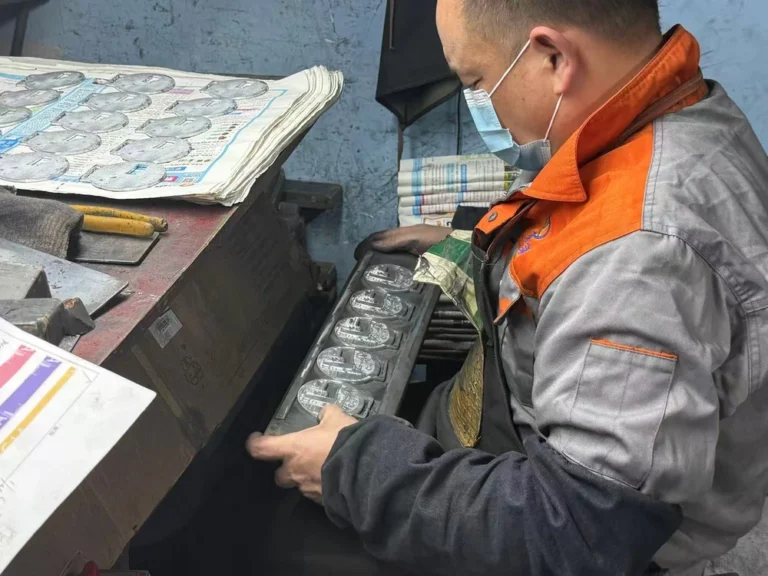
The manufacturing of custom medals includes several stages: mold creation, casting/stamping, polishing and plating, coloring, assembly, and packaging.
Understanding these distinct phases helps you manage expectations and plan your ordering schedule effectively.
Here is a closer look at what happens during each stage of manufacturing custom medals, where production lead times can vary depending on factors such as medal type, material availability, and logistics. Typically, the production time for custom medals ranges from 2 to 14 weeks depending on the material and shipping method.
The process starts with submitting your design or working with a manufacturer’s team to create a custom design, with design approval being a crucial step in the custom medal production time. It’s important to spend a few days brainstorming and preparing design ideas to ensure a unique and appealing final product.
While this step is usually quick, multiple rounds of revisions to the artwork can occur, which may delay the process, especially if there are issues like low-resolution logos or slow feedback. Design and artwork approval for custom medals typically takes 1 to 7 days, with potential delays due to multiple revision rounds.
Once the design is approved, a mold is created. The minimum order quantity can affect mold making and production requirements, as higher MOQs may justify the cost and time of creating new molds, while lower MOQs might limit customization options. This is essential for producing die cast medals or die struck medals, depending on the chosen manufacturing method.
Complex designs, such as intricate 3D high-relief images, cut-outs, or multi-piece spinner medals require more detailed tooling and consequently take more time to complete than simple, flat designs. Using existing molds from previous orders can save 3 to 5 days in the production timeline.
For large orders or highly detailed designs, producing a physical sample is highly recommended. The factory manufactures a small run of metal medals (usually 1–5 pieces) for your physical inspection. This allows you to verify the colors, plating, and weight before committing to full-scale manufacturing. If revisions are needed after seeing the sample, the production timeline will be extended. If you choose to skip the pre-production sample and approve via digital photos, you can save about a week.
Upon final approval of the sample (or digital proof), full-scale manufacturing begins. This is where the bulk of the custom medal production time is spent.
Different medal types and medal designs—such as die struck, die cast, acrylic, PVC, wooden, and glow-in-the-dark medals—have unique production requirements and timelines. The manufacturing method depends on the type of medal ordered:
Die Cast Medals: Created using custom molds to inject molten metal, die cast medals allow for more complex shapes and intricate medal designs compared to other methods.
Die Struck Medals: Produced by stamping a design onto a metal sheet, die struck medals are ideal for detailed designs but are generally limited to simpler shapes.
Acrylic and PVC medals are popular lower-budget alternatives, suitable for events like fun runs, and can be produced quickly without the need for casting molds. Wooden medals are increasingly favored for their low environmental impact and cost-effectiveness, especially in trail races, though they may be perceived as less prestigious than metal options.
Glow-in-the-dark medals utilize fluorescent enamel colors to create a unique effect, making them popular for themed events like night runs. Wood or acrylic medals generally take 1–3 weeks to produce.
Larger quantities naturally require more time on the production line. Small batches of custom medals (under 100) are generally produced faster than bulk orders (over 2,000), while extended production runs for large orders can significantly increase lead time.
Order quantity can affect lead time; smaller orders may be processed faster due to less resource allocation, while larger orders can extend production time due to batching requirements.
Additionally, design complexity significantly impacts lead time—simpler medal designs can be produced faster than intricate ones, which require more precision and time for production.
When it comes to finishes, soft enamel is often used for a textured look, while antique gold plating requires additional polishing steps, which can further extend the overall production time.
After manufacturing, the medals undergo rigorous quality control to check plating consistency, paint details (if enamel is used), and the attachment of medal ribbons. Storing inventory at the manufacturer’s facility can help expedite fulfillment and reduce lead times, ensuring that orders are shipped promptly. They are then individually packaged and prepared for shipment.
The final leg of the journey depends entirely on the shipping method and destination country:
Air Shipping: Air freight for shipping custom medals can take 5–15 days internationally. This is faster but incurs higher shipping costs.
Ocean Freight (Sea Shipping): Ocean freight is a cost-effective shipping method for bulk orders of heavy metal medals, but can take 5–14 weeks. It is much more economical but requires significant lead time.
The average custom medal lead time typically ranges from 20 to 40 days, depending on factors such as design complexity and shipping options.
Several factors can influence the overall custom medal lead time:
Design complexity (e.g., die cast, 3D, spinner designs)
Order quantity
Factory workload (peak vs off-season)
Special finishes or packaging
Type of medal (e.g., custom race medals, insert medals, or custom metal medals)
Delays in the ordering process can occur due to slow communication, multiple rounds of design revisions, and incomplete order details, which can result in significant delays.
Seasonal demand and factory holidays, such as the Lunar New Year or year holiday periods, can lead to significant delays in production and shipping times.
Each of these can either shorten or extend the total timeline.
Effective planning is the foundation of a successful custom medal order. Event organizers should start by determining how many medals are needed, factoring in the number of participants, award categories, and a few extras for unforeseen circumstances.
The type of medal you choose—whether insert medals, wooden medals, or traditional die cast or die struck medals—will influence both the production timeline and shipping costs.
For example, die cast medals and die struck medals typically require longer lead times due to their detailed manufacturing processes, while insert medals and wooden medals can often be produced more quickly.
It’s essential to align your order with your event date, allowing ample time for the approval process and accounting for any potential unforeseen delays. By planning ahead and understanding the variables that affect when your custom medals arrive, you can ensure a smooth process and timely delivery for your event.
If you have a tight deadline, many manufacturers offer expedited production services for a custom medal order.
Depending on the type of medal and factory availability, rush timelines can sometimes shrink production to as fast as 7–15 days. However, this speed comes with increased manufacturing costs and usually requires expedited air shipping, significantly increasing the overall price. Not all designs or quantities are eligible for rush processing.
Event organizers often weigh the pros and cons of ordering from overseas vs. local suppliers.
Pros: Generally lower per-unit production costs, particularly for high-quality metal medals and large bulk orders.
Cons: Significantly longer custom medal lead time due to shipping. You must factor in customs clearance and international transit.
Pros: Much faster turnaround times, often because they hold stock medals domestically and only need to add custom engraving or printing. This is ideal if your event date is imminent.
Cons: Higher unit costs, especially for fully customized 3D designs.
For the vast majority of major endurance events requiring custom race medals in bulk, ordering 30 to 60 days in advance from a quality overseas medal supplier offers the best balance of cost and customization.
To keep your custom medal lead time short and efficient:
Provide complete details from the start
Avoid unnecessary design revisions
Plan ahead (order 30–60 days early)
Work with an experienced manufacturer
These steps help ensure your custom medals are ready on time.
Timely delivery of custom medals is critical to the success of any event. To achieve this, event organizers must be aware of the specific lead times associated with their chosen medal type and plan accordingly.
If your event date is approaching quickly, consider pairing rush production with expedited shipping methods such as air freight to reduce overall production time—though this may involve an additional fee.
Quality control is another key factor; thorough inspections during the production process, especially for die cast medals and cast medals, help prevent last-minute issues that could delay delivery. Understanding the steps involved, from mold creation for die cast medals to the final packaging, allows you to anticipate potential bottlenecks.
Choosing the right shipping method, whether air freight for speed or sea freight for cost savings, also plays a significant role in ensuring your medals arrive as scheduled. By staying proactive and informed, you can minimize risks and guarantee timely delivery for your custom medals.
Avoid these pitfalls that can cause you to miss your deadline:
Frequent Post-Approval Changes: Requesting design changes after the mold has been made resets the entire timeline and adds costs.
Ignoring Shipping Time: Buyers sometimes only focus on the production time (e.g., 15 days) and forget to add the transit time (e.g., 30 days for sea freight).
Late Ordering: Waiting until the last minute eliminates your buffer time for quality checks or shipping delays.
Custom medals are more than just awards—they’re powerful tools for building excitement and creating lasting memories. Event organizers can maximize the impact of their custom medals by unveiling the design on social media ahead of the event, generating buzz and anticipation among participants.
Customizing medal ribbons to match your event’s colors or theme adds a personal touch and enhances the overall presentation. Whether you choose traditional die cast medals, modern insert medals, or eco-friendly wooden medals, thoughtful design and planning can elevate your event’s prestige.
By considering every detail, from the type of medal to the finishing touches, you ensure your medals not only arrive on time but also leave a lasting impression, making your event truly unforgettable for everyone involved.
Successfully ordering custom medals relies entirely on understanding and managing the timeline. The standard turnaround is generally 3–6 weeks total, combining custom medal production time and shipping transit.
Early planning is the most effective tool an event organizer has, but choosing the right manufacturing partner is just as critical. PeaKeen is dedicated to ensuring that your production timeline is realistic and that your order arrives with the precision your athletes deserve.
Next Step: Do you have a firm event date in mind? Contact PeaKeen team today for a tailored production schedule.

Table of Contents Leather keychains are a massively popular category in the world of custom corporate gifts. They are highly

Table of Contents Finding the right manufacturing style for branded merchandise can be challenging for corporate buyers. High quality pvc
No. 5, Tongan Road,
East District Xiaolan Town,
Zhongshan, Guangdong,
China