PeaKeen_logo

Custom Keychain Artwork Guide: Files, Line Width & Pantone Colors

Table of Contents

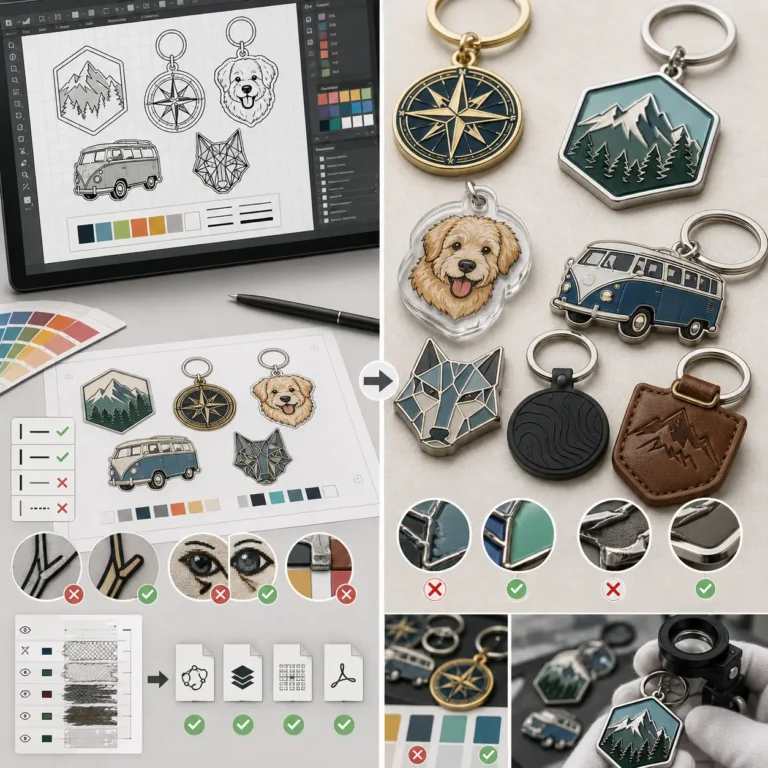
A custom keychain artwork guide showing enamel and acrylic keychain examples with design requirements for file formats, line width, and Pantone colors.

Why File Prep Determines How You Customize Keychains

For custom keychains, the distance between a design file and a finished product comes down to a handful of technical details most buyers never think about until a proof comes back wrong.

A file in the wrong format gets rejected outright. Lines drawn too thin snap during production. Small text blurs into an unreadable smudge. Colors that looked crisp on a screen arrive muted or shifted once stamped, printed, or etched into metal. None of these problems are rare, and none are hard to avoid once you know what a production-ready keychain artwork file needs.

This guide is for any B2B buyer who wants to order custom keychains — whether for onboarding kits, promotional keychains at a trade show, or a campus retail run — without the back-and-forth of a rejected proof.

The design tips below cover file formats, line width, text sizing, and color matching: the same checkpoints a factory runs through before it quotes a job. Getting them right the first time saves money on avoidable revisions, no matter how many keychains you’re ordering.

A custom keychain manufacturing guide showing artwork design, digital prototypes, finished keychain samples, material options, and quality inspection details.

Accepted File Formats

Vector formats are the standard for keychain production: whether custom keychains are made in metal, PVC, or acrylic types, AI, EPS, PDF, and SVG files preserve artwork as mathematical paths rather than a fixed grid of pixels, so a factory can scale your business logo without losing a crisp edge.

JPG and PNG files are useful for reference only — they can’t be enlarged for laser cutting or mold making without the edges turning blocky or soft. This matters most for engraved keychains and molded metal keychains, where a cutting or stamping tool follows the exact outline in the file; by contrast, custom PVC keychains are more budget-friendly and waterproof, but they still benefit from clean outlines when artwork is being shaped.

Custom printed and acrylic keychains are more forgiving, since full color printing can work from a high-resolution raster file, but vector art still produces the sharpest result, and acrylic keychains are also shatterproof, which is one reason they are popular for printed designs.

Before you upload artwork, name the file clearly and organize your layers — keep the outline, fill colors, and any text on their own labeled layers.

Other materials, such as embroidered, bamboo, recycled-plastic, or wooden keychains, may need the same clear artwork prep, with wooden styles often laser-engraved.

If you’re submitting multiple designs in one batch, such as a few variations for different departments, keep each version clearly separated.

Embroidered options are especially lightweight and soft, while eco-friendly versions made from bamboo, wood, or recycled plastics still depend on clean files to suit different materials.

A well-organized file lets a factory’s design team identify each element in seconds, which keeps your digital proof turnaround fast.

Line Width Requirements

Line width tolerances vary by production method, and this is where custom keychains types diverge the most.

Hard enamel and soft enamel pieces need enough space between metal ridges for the recessed color to hold — thin lines are one of the most common causes of mold failure and cracked enamel.

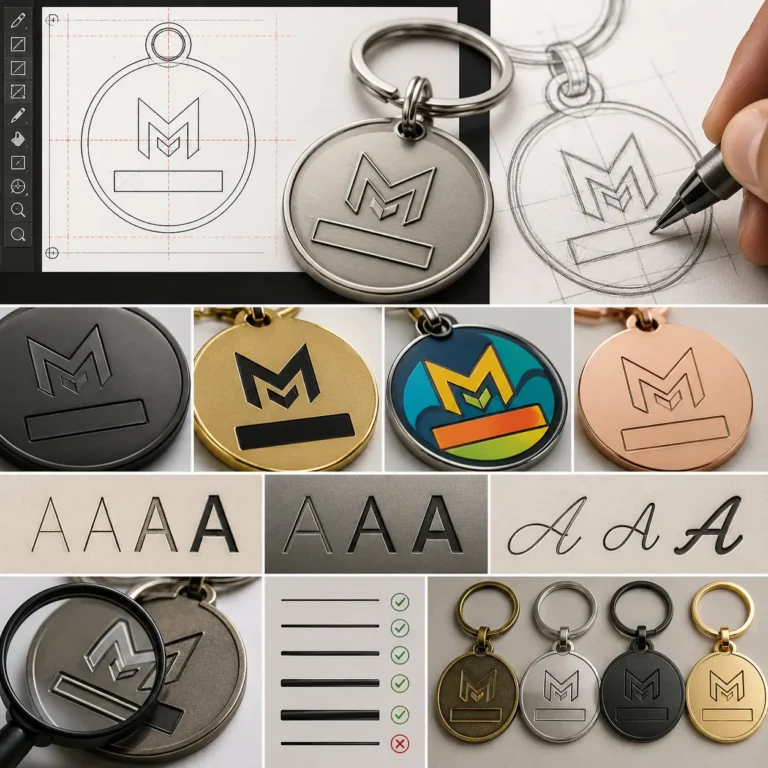
Engraved metal keychains, whether cut into zinc alloy or stainless steel, are durable for daily use and need enough material on either side of a cut line to stay structurally sound, and they can be engraved or finished with enamel.

Acrylic keychains are more flexible since the design is printed rather than cut, but PVC or rubber styles can support vibrant colors and 3D designs, while lines that are too thin will still blur under printing.

As a general guide, most factories ask for a minimum line width of around 0.3–0.4 mm for enamel processes and closer to 0.5 mm for etched metal, though figures vary by material thickness and detail density.

Since durability is a key consideration for daily use, anything thinner risks breaking during manufacturing or coming out as a blurry smudge.

Cutout and bridge design — the negative space where metal is removed entirely, such as the loop that holds a key ring or the slot on bottle openers — deserves particular attention.

These areas carry real structural stress, so the connecting bridges of material around them need to follow the same width guidelines as the rest of the design for a more sturdy result in everyday carry, or the piece can snap during regular use.

A custom metal keychain design showcase featuring CAD drawings, engraving samples, color finishes, plating options, and prototype variations.

Text Size Guidelines by Keychain Type

Text follows many of the same physical rules as line art, with a few of its own.

Most factories recommend a minimum readable height of about 2–2.5 mm for any text on a keychain — smaller than that, and even good quality tooling struggles to reproduce individual letterforms cleanly.

This comes up often with personalized company logo keychains that include a name, department, or short tagline alongside a logo. Common choices include initials, important dates, or meaningful quotes.

Font choice matters just as much as size.

Bold, simple sans-serif fonts hold up best at a small scale, while engraving is often the subtler personalization option and full-color printing works better for more complex designs.

Script or handwritten-style fonts — however appealing on screen — tend to lose their connecting strokes once shrunk down for production. If a script font is part of your branding, reserve it for larger elements rather than fine print.

Text stroke thickness should follow the same minimum width standards as the rest of your line art; a letter drawn with hairline strokes breaks down the same way an overly thin logo outline does. Reversed or cutout text, where the letters are open space rather than solid color, needs even more caution, since each letter’s negative space becomes its own small bridge that has to survive production intact.

Thoughtful personalization can also increase sentimental value, especially when the piece is meant as a gift, so the text and layout should match the recipient’s style and the keychain’s intended function.

A custom keychain production showcase featuring artwork design, color selection, enamel keychain samples, acrylic keychains, and leather keychain finishes.

Pantone Color Matching

Screen colors and finished-product colors are not the same thing, which is why Pantone codes matter so much for custom designs.

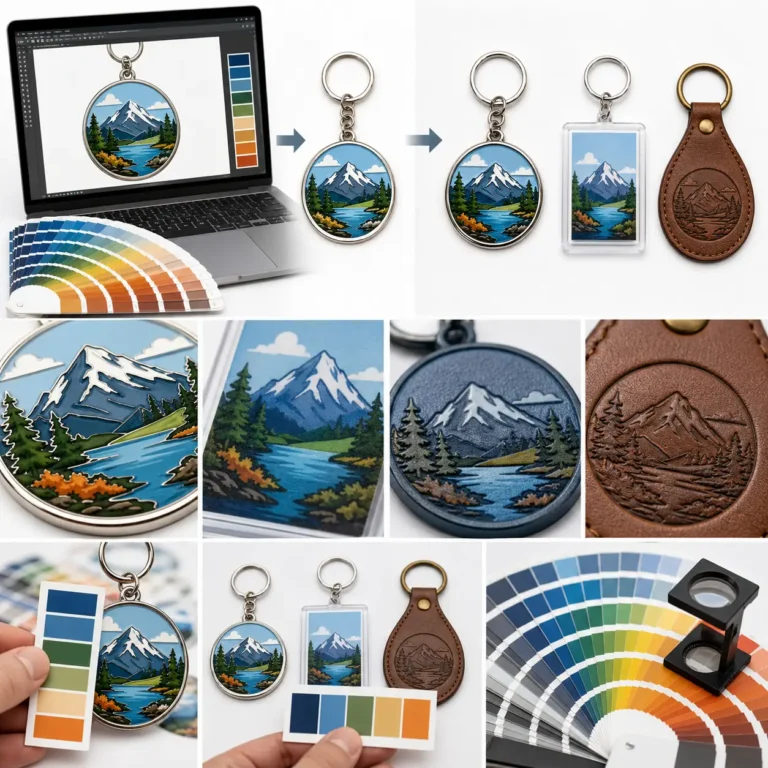
RGB and CMYK values are built for digital displays and standard printing, but they shift depending on the screen or printer showing them — the vibrant colors visible on a laptop can look noticeably different once translated into enamel paint, powder-coated metal, or printed acrylic.

Pantone’s numbered system removes that guesswork, since each code corresponds to a fixed, physical color standard a factory can match directly. Material and finish choices also affect how a color reads, including leather pieces with embossed logos.

If you don’t already have Pantone codes for your brand colors, a physical Pantone swatch book or a Pantone-certified design tool can help identify the closest match to your existing RGB or CMYK values.

It’s worth doing this once for your own custom keychains and saving the codes for future orders, since it keeps every batch consistent. Color and decoration choices also need to suit the keychain’s shape, especially when adapting creativity across more than 78 different customization options.

For enamel processes specifically, each additional color adds a separate recessed cell, which adds production time and typically raises the unit price.

Designs that lean on rich color variety often work out more cost-effective as a custom printed or acrylic piece, where full color printing carries no per-color surcharge, rather than as a heavily multi-color enamel design.

Functional or smart options such as bottle openers, digital trackers, or NFC features may also influence which decoration method works best. Themed or collectible series can also benefit from consistent color matching across multiple designs.

From a Free Design Check to Confident Bulk Orders

Once your file meets these standards, the next step is straightforward. PeaKeen’s design team provides a hands-on service for customers by reviewing every submitted file before quoting a job, flagging thin lines, low-resolution art, or missing Pantone codes, and helping you request a free quote with fewer surprises.

That design check catches most issues before a physical proof is made, which keeps your keychain order on schedule and avoids paying for revisions on a piece that was never going to mold correctly.

You can review and modify the design until you are satisfied before approval.

From there, the custom keychain production process runs the same for any bulk orders: 

You send over your logo or artwork, PeaKeen returns a digital proof within 12 hours for approval, and full production plus shipping typically take 3–5 days after you sign off.

Whether your minimum order is a few hundred pieces or several thousand, a clean, production-ready file remains the single factor most likely to get you the best results — and let you order keychains with confidence. Quantity affects the unit price, and bulk orders help save money.

More Posts

Send Us A Message

Contact Us

What customization do you need? – Get expert support now

Haven't Find What You Need?

Contact Us For More

Get Discount

New Client Special Offer

10% Off